
Choosing a gauge comes down to how you use it and what you drive. You’re picking between analog dials that need no power and digital tools with screens. The main differences are the chuck shape, the pressure range, and how they handle air flow.
Best overall: Milton Swivel Angle Chuck, because its mechanical design works without batteries and uses a reliable bourdon tube for consistent, heavy-duty use across many different vehicle types.
Best for motorcycles: PUIBERS Right Angle Gauge, which features a glow-in-the-dark dial for low-light use and a flexible hose that makes reaching tight motorcycle valve stems much easier than a stiff tool.
Best heavy duty: Milton 976BKL Angled Chuck, as it’s built from solid brass with a non-slip grip, making it the choice for demanding environments like shops or when servicing large vehicle tires.
How We Picked
We compared 88 different listings for tire pressure gauges to find options that offer clear technical specs. To earn a spot here, a product had to state its pressure range, its chuck design, and whether it met industry standards for accuracy. We excluded any listings that lacked basic information about construction or intended use. Our focus was on durability and ease of use, ensuring that every selection provides a clear advantage for the specific driver it targets.
All 10 products side by side — scroll sideways to see every column.
| Top Pick | Best for Motorcycles | Also Great | ||||||||
| Preview |  |  |  | 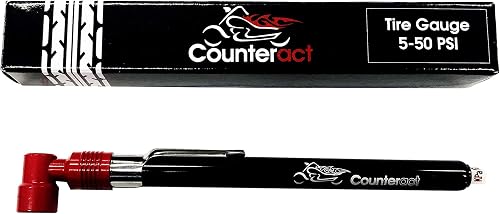 |  |  | 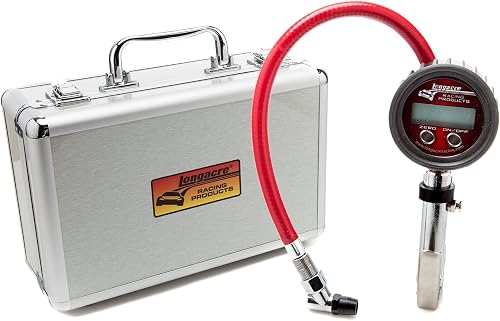 |  |  |  |
|---|---|---|---|---|---|---|---|---|---|---|
| Product | Milton Swivel Angle Chuck | PUIBERS Right Angle Gauge | Milton 976BKL Angled Chuck | Counteract MKPG-D 90 Degree | RH100XA Angled Swivel Chuck | PINKJOY Digital 45 Angle | Longacre 50386 Digital Angle | Milton S-982C Service Gauge | Milton Straight Chuck Gauge | Rhino USA Glow Dial |
| Brand | Accu-Gage | PUIBERS | Milton | Counteract | Accu-Gage | PINKJOY | Longacre | Milton | Accu-Gage | Rhino USA |
| Best for | Best Overall | Best for Motorcycles | Also Great | — | — | — | — | — | — | — |
| The listing says | Analog bourdon tube design requires no batteries Swivel angle chuck prevents air leakage | Bronze bourdon tube meets ANSI B40.1 standards Luminous dial with 90 degree chuck | Brass body with non-slip poly finish Heavy-duty brass construction resists corrosion | 90 degree head for difficult valves All metal construction | 100 PSI with swivel chuck and hose Geared movement with bronze Bourdon tube | 45 degree chuck for tight stems Digital display with 1% accuracy | Not stated | Field adjustable calibration technology Heavy duty plated brass construction | Analog bourdon tube requires no batteries Straight air chuck with braided hose | 0-60 PSI gauge with 2 inch dial Integrated deflator valve |
| More information | Buy on Amazon | Buy on Amazon | Buy on Amazon | Buy on Amazon | Buy on Amazon | Buy on Amazon | Buy on Amazon | Buy on Amazon | Buy on Amazon | Buy on Amazon |
1. Milton Swivel Angle Chuck
Best for: Everyday drivers and home mechanics.
This gauge stands out because it uses a mechanical bourdon tube. This design means you never have to worry about dead batteries or changing temperatures affecting your readings. It’s built for heavy-duty work, which makes it a rugged choice for a tool box or a glove compartment. Unlike piston-plunger designs, the bourdon tube remains unaffected by altitude, humidity, or air stream contaminants.
The swivel angle chuck is a key feature here. It creates a seamless connection seal on the valve stem to stop air from leaking out while you check the pressure. If you have too much air in your tires, you can use the built-in deflator valve to bleed excess air and reach the right level quickly.
If you’re struggling to reach a valve, press the chuck firmly until the seal holds. The gauge retains the PSI reading even after you remove it from the tire, allowing you to check the dial in better light. This tool isn’t for those who prefer digital displays that show exact numbers at a glance.
Pros
- No batteries required ever.
- Swivel chuck prevents air leaks.
- Includes a built-in deflator valve.
Cons
- Analog dial is smaller.
2. PUIBERS Right Angle Gauge
Best for: Motorcycle and bicycle owners.
This gauge is designed specifically with a flexible hose and a 90-degree chuck. This shape is perfect for reaching into crowded wheel hubs where a straight gauge would never fit. The dial glows in the dark, which is a helpful touch if you’re checking your pressure in a dim garage or at night.
The bronze bourdon tube inside is built for precision. It is a mechanical device that does not require power. It is ideal for riders who want a simple, durable tool. If your tires require more than 60 PSI, this gauge won’t work for you, as it’s calibrated specifically for that range.
Check your tire valve type before buying; this tool is engineered exclusively for Schrader valves. Using it on other valve types will result in inaccurate readings or an improper seal. This gauge isn’t intended for heavy industrial equipment with very large bore valves.
Pros
- Luminous dial for low light.
- Flexible hose reaches tight spots.
- Sturdy brass construction.
Cons
- Limited to 60 PSI.
- Compatible only with Schrader valves.
3. Milton 976BKL Dual Head Angled Chuck Tire Pressure Service Gauge
Best for: RV and large truck owners.
This tool is built for serious work. It features a brass body with a black poly finish that’s easy to grip, even if your hands are greasy or wet. The dual-head angled chuck is specifically shaped to reach recessed valve stems on large vehicles like tractor-trailers or RVs.
Because it’s made from heavy-duty brass, it handles tough environments well. The scale bar is stamped into the tool, so it’s always easy to read the pressure in both PSI and kPa. This is a larger, longer tool, so it isn’t the most convenient choice for someone who only needs a compact gauge for a small sedan.
If you’re working on dual wheels, use the 30-degree angled head to reach the inner valve stem without forcing the gauge. If the gauge feels slippery, the matte black poly finish is designed to maintain traction in wet or oily shop conditions. Avoid using this on standard passenger cars if you prefer a pocket-sized tool, as the 13-inch length is optimized for clearance on big rigs and heavy equipment.
Pros
- Non-slip grip for workshops.
- Dual-head for recessed valves.
- Corrosion-resistant brass construction.
Cons
- Less compact than dial gauges.
4. Counteract MKPG-D Analog Tire Air Pressure Gauge
Best for: ATV and motorcycle enthusiasts.
The 90-degree head is the main feature of this gauge. It’s designed to reach into tight spaces where standard, straight-nozzle tools fail to seat properly. The all-metal construction provides a solid, durable feel that resists the wear common in trailside toolkits.
Because it measures up to 50 PSI, it works well for smaller vehicles and off-road tires. If your vehicle requires pressures exceeding 50 PSI, this gauge won’t provide an accurate reading and may be damaged by internal overpressure. Always check your tire sidewall specifications before testing.
The black anodized body and custom red head give it a distinct look that stands out in a crowded garage. It’s a simple, no-nonsense tool that does exactly what it’s designed to do.
Pros
- Durable all-metal construction.
- 90-degree head for accessibility.
- Compact and easy to store.
Cons
- Lower maximum pressure range.
- Limited to 5-50 PSI (50-300kPa) applications.
5. RH100XA Tire Pressure Gauge with Hose and Protective Rubber Guard
Best for: Drivers needing high-pressure capacity.
This gauge features a flexible hose and a protective rubber guard. The guard is essential, as it shields the dial if you drop the tool on concrete. It uses a bronze Bourdon tube for precision movement, ensuring the needle remains accurate. The gauge holds the pressure reading until you press the release button, which also functions as a bleeder valve to reach your exact target pressure.
The angled swivel chuck allows you to position the gauge easily on any valve stem. If you’re struggling to get a seal, rotate the chuck to find the optimal angle before pressing down. This tool is balanced for durability. If you prioritize a pocket-sized gauge, look elsewhere; the hose and rubber housing increase the overall dimensions.
ANSI B40.1 Grade B accuracy ensures you meet California regulations. Because the gauge holds the reading until released, you can check your tires without needing to see the dial while the chuck is engaged.
Pros
- Includes protective rubber guard.
- Flexible hose adds reach.
- Holds reading until released.
- Lifetime warranty in USA and Canada.
Cons
- Bulkier than basic, non-hosed models.
6. PINKJOY Digital Tire Pressure Gauge 250 PSI
Best for: Users who prefer digital readouts.
If you like digital numbers, this gauge is a strong choice. It features a bright screen that makes reading your tire pressure very simple. The display can show your readings in multiple units at once.
The 12-inch flexible hose gives you plenty of room to work. That extra reach helps if you’re dealing with dual tires or racing setups.
It handles up to 250 PSI, so it covers almost any vehicle you might own. Cars, trucks, and motorcycles all fall within its range.
The built-in bleeder valve lets you adjust your pressure down quickly. You use it when you have put too much air in.
The 45-degree angle chuck reaches tight valve stems easily. This shape matters most on motorcycles where space around the stem is limited.
Readings stay accurate within one percent across the entire scale. Because it uses digital technology, you’ll need to keep an eye on battery life.
It isn’t for those who want a tool that works forever without power.
Pros
- Easy-to-read digital screen.
- High 250 PSI capacity.
- Flexible 12-inch hose.
Cons
- Requires battery power.
7. Longacre 50386 Digital Angle
Best for: Professional-grade accuracy seekers.
This digital gauge prioritizes precision by replacing analog needles with a clear screen. This eliminates the guesswork inherent in reading traditional dials, ensuring you get an exact number every time. The integrated angle chuck is engineered to seat firmly onto valve stems, allowing for a secure connection that minimizes air leakage during the measurement process.
If you’re working with high-performance tires, this tool is your primary choice because it focuses entirely on consistent, repeatable data. Avoid this gauge if you require advanced capabilities like programmable pressure alerts or data logging, as those features are absent here.
The device operates within a range of 0 PSI to 60 PSI, making it ideal for standard passenger vehicles and light trucks. Stick to this range; attempting to measure pressures exceeding 60 PSI may compromise the sensor’s accuracy or longevity. By keeping the design strictly functional, the tool remains compact and easy to handle in a busy garage.
Pros
- Digital display for accuracy.
- Simple angle chuck design.
- Compact and easy to handle.
Cons
- No extra features listed.
8. Milton s-982C Calibratable Tire Pressure Service Gauge
Best for: Heavy-duty equipment owners.
This service gauge uses a patent-pending calibration system. You can adjust the gauge yourself in the field using the included clip-on tool to ensure it stays accurate. It’s built from heavy-duty plated brass with seamless tube construction, designed to resist corrosion in tough, demanding service environments.
The large bore dual head chuck is made specifically for heavy equipment. If you’re working with large-bore valve types, this tool will fit where standard gauges fail. Because it’s specialized for these larger valves, it isn’t the correct choice for a regular passenger car with standard valve stems. Using this on a standard stem will result in an improper seal and inaccurate readings.
Always check your valve type before use. If you see a significantly wider opening than a standard automotive stem, this gauge is your required tool.
Pros
- Field-adjustable calibration system.
- Built for large bore valves.
- Corrosion-resistant brass body.
Cons
- Not for standard car valves.
9. Milton Straight Chuck Gauge
Best for: Reachable tire valves.
This gauge features a straight chuck and a braided hose. The hose provides the flexibility you need to reach valves at awkward angles, even if you’re working on a truck or a motorcycle. It uses a bourdon tube, so it’s reliable and doesn’t need any batteries. Unlike piston-plunger designs, this movement remains unaffected by shifts in temperature, humidity, or altitude.
The gauge is ANSI certified to Grade B specifications, which gives you confidence in the accuracy of your readings. Like other mechanical gauges here, it holds the pressure reading until you press the release button. This makes it ideal for checking hard-to-reach tires where you can’t easily see the dial while attached.
Use this tool if you need to adjust pressure, as it includes a built-in deflator valve for precise venting. However, avoid this model if your vehicle has deeply recessed valve stems. In those cases, a straight chuck will fail to create a proper seal, leading to air leakage. If you struggle to seat the chuck, switch to an angled head design.
10. Rhino USA Heavy Duty Tire Pressure Gauge
Best for: Low-light tire checks.
The large, 2-inch glow dial is the highlight of this gauge. It’s very easy to read, even when you’re working in the dark or in a shaded area. It feels solid in the hand and is built with brass hardware, which adds to its durability.
If you’re checking pressure on a daily driver, the ANSI B40.1 certification ensures you’re getting an accurate reading every time. This precision helps your tires last longer and improves overall fuel economy.
It comes with a braided hose and a 360-degree swivel chuck, making it easy to connect to your tires regardless of the valve stem angle. The integrated deflator valve is essential if you’re heading off-road and need to air down for better traction.
This is a robust tool, but it isn’t for those looking for a very small, pocket-sized gauge. If you prioritize portability over visibility, look elsewhere.
Pros
- Large glow-in-the-dark dial.
- Integrated air deflator valve.
- Solid brass swivel chuck.
Cons
- Larger dial size.
How to Choose in Sixty Seconds
Which type of gauge lasts longer?
Mechanical analog gauges typically last longer than digital ones. They use simple internal parts like a bronze bourdon tube to move the needle. Because they don’t rely on circuit boards, screens, or batteries, they’re less likely to fail due to moisture or cold weather. Digital gauges are often more convenient to read, but they can be sensitive to drops and require battery changes. For long-term use in a workshop or a garage, an analog gauge with a solid brass body is a safe bet. Always check that the gauge meets ANSI B40.1 standards for accuracy, as this confirms the tool has been calibrated to a professional grade.
Does the chuck shape really matter?
The chuck shape is the most important factor for convenience. An angled chuck is necessary if your valve stems are recessed or hard to reach, as it allows you to press the gauge on without bending the stem or losing air. A straight chuck works fine for wheels where the valve is exposed and easy to access. If you have different types of vehicles, a swivel chuck is the best choice because it can rotate to fit various angles. Choosing the right chuck shape prevents air leaks and helps you get a good seal on your tire valve.
What should I look for in a hose?
A flexible hose is a major advantage for any tire gauge. A rigid gauge forces you to hold your head in an awkward position to read the dial while the tool is pressed onto the valve. A hose lets you keep the gauge in your hand where you can see it clearly while the chuck is attached to the tire. Look for braided hoses, as they provide extra durability and resist kinking. If you have a vehicle with dual tires or large rims, a longer hose will make the process much easier, as it gives you the extra reach needed to access the inner valves.
Frequently Asked Questions
Do these gauges need calibration after I buy them?
Most of these gauges come factory-calibrated to meet industry standards. Some models, like the Milton S-982C, include a field-calibration tool for manual adjustments. Note that you should store these tools in a protective case to prevent internal misalignment from drops.
Can I use these gauges on all vehicle types?
Most gauges are universal, but you must match the chuck type to your specific valve stems. An angled or swivel chuck suits cars and motorcycles, while a large-bore chuck is for heavy equipment. Always ensure the gauge’s pressure range covers your vehicle’s maximum PSI.
What is the first thing that goes wrong with these tools?
A damaged chuck seal is the most common cause of air leaks during use. This usually results from applying the chuck to the valve stem at an incorrect angle. Keep the gauge in a protective pouch when not in use to keep the seals clean.
Is the simplest analog gauge enough for my needs?
An analog gauge is sufficient for most drivers who need to check tire pressure occasionally. These tools are durable and require no batteries for consistent results. Note that digital alternatives offer easier-to-read displays but require periodic battery replacements.
Closing
The Milton Swivel Angle Chuck remains our top pick for its reliable, battery-free performance and durable mechanical design. Its bourdon tube movement resists errors from temperature, humidity, or altitude, ensuring consistent results. For those needing a tool specifically for motorcycle or tight valve stems, the PUIBERS Right Angle Gauge offers superior access and a luminous dial for low-light visibility.
If you’re maintaining heavy-duty equipment or large rigs, choose a model with a large-bore dual head chuck, such as the Milton S-982C, to ensure a proper seal on larger valve types. Regardless of the model, always check your tire pressure when the tires are cold. Heat generated from driving increases internal pressure, which leads to false, high readings.
Finally, use the integrated deflator valve found on most mechanical gauges to bleed excess air for precise adjustments. This simple habit improves vehicle handling, extends tire life, and maximizes your fuel efficiency across all terrains.
Related posts:
 7 Best Portable Air Compressor for Car Tires: Top Picks Reviewed
 Best All Terrain Truck Tires for Towing: Ultimate Durability and Performance
 5 Best Tire Inflator for Truck Tires: Top Heavy-Duty Picks for 2025
 Best Fuel Tank Cleaner for Removing Sludge and Varnish Efficiently
 Best Gas Fuel Injector Cleaner: Top Picks to Boost Engine Performance
 Best Brake Pads for Trucks: Top Picks for Heavy-Duty Performance
 Best Automotive Air Compressor: Top 5 Tire Inflators for Your Vehicle
 Best Automotive Buffer for Flawless Car Detailing and Polishing
 Best Automotive Bug And Tar Remover: Top 5 Picks for Spotless Cars
 Best Automotive Water Spot Remover for Cars, Trucks, RVs & More