
Choosing the right turn plates means balancing your vehicle weight against the level of precision you need for your alignment work. These tools provide a smooth, low-friction surface that allows wheels to rotate freely, which is essential for accurate measurements. The main differences lie in load capacity, the presence of built-in angle scales, and the materials used for durability.
Best overall: VEVOR Alignment Turn Plates, which offer a solid carbon steel build and a 2-ton capacity that suits most everyday vehicles while including clear brass dials for easy angle tracking.
Most durable construction: Longacre Aluminum Turn Plates, which feature a low-profile design that works well on top of scale pads and are built to handle high-performance alignment needs without binding.
Best for heavy vehicles: TFCFL Aluminum Turn Plates, which provide a high 3-ton capacity per plate and a full 360-degree rotation, making them reliable for larger trucks and SUVs.
This guide is for anyone looking to perform their own wheel alignments or improve the efficiency of their shop setup.
How We Picked
All 10 products side by side — scroll sideways to see every column.
| Top Pick | Best for Scale Pads | Best for Heavy Vehicles | Best for Sports Cars | Best for Shop Maintenance | Best for Alignment Lifts | Best for Lift Grooves | Best for Pointer Systems | |||
| Preview |  |  |  |  | 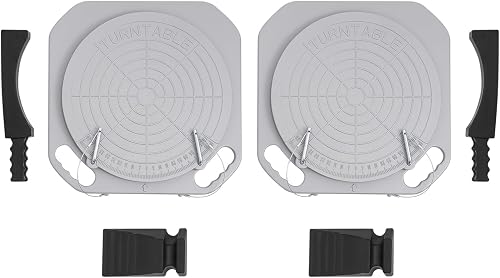 |  |  |  |  | |
|---|---|---|---|---|---|---|---|---|---|---|
| Product | VEVOR Alignment Turn Plates | Longacre Aluminum Turn Plates | TFCFL Aluminum Turn Plates | Premium Aluminum Turn Plates | Magnesium Aluminum Turn Plates | Aluminum Rotating Turn Plates | Magnesium Alloy Turn Plates | Wheel Alignment Turn Plates | Pair Wheel Alignment Turnplates | Car Front End Turntable |
| Brand | VEVOR | Longacre | TFCFL | Speedway Motors | Bamiyune | Generic | MooKuQi | FLYHERO | WHODNUS | YIYIBYUS |
| Best for | Best Overall | Best for Scale Pads | Best for Heavy Vehicles | Best for Sports Cars | Best for Shop Maintenance | Best for Alignment Lifts | — | — | Best for Lift Grooves | Best for Pointer Systems |
| The listing says | Two plates for smooth wheel rotation Supports up to 2 tons per plate | Free floating in 2 directions Reads to 1/2° with zeroing | Full 360° rotation with 0-50° scale Supports 6,613 lbs per plate | Markings at 0, 10, 15, 20 degrees High-quality aluminum construction | Supports over 6,613 lbs per plate Full 360-degree rotation | Over 6613 lbs load capacity per plate Measures 15.74 x 15.74 x 1.96 inches | Supports over 6600 pounds per plate Measures 15.74 x 15.74 inches | Includes two pieces and transition blocks Made of high quality magnesium alloy | Supports over 6613 lbs per plate Size 40x40x5cm fits various vehicles | Supports 1 ton per plate Adjusts 0-50 degrees with 60° scale |
| More information | Price on Amazon | Price on Amazon | Price on Amazon | Price on Amazon | Price on Amazon | Price on Amazon | Price on Amazon | Price on Amazon | Price on Amazon | Price on Amazon |
1. VEVOR Wheel Alignment Turn Plates
Best for: Home mechanics working on daily drivers and SUVs.
These plates use a reinforced carbon steel base to support up to 2 tons each. The brass dial allows you to track steering angle changes with 1-degree increments, which helps you keep your adjustments precise. You also get two transition bridges and wheel chocks, making it easier to drive your car onto the plates safely.
The design includes handle slots to help you move them, and each plate measures 15.74 x 15.74 inches to fit a variety of vehicles.
Pros
- Includes transition bridges and chocks
- Clear brass dial for precision
- Solid carbon steel construction
- Helpful handle slots for movement
- Supports up to 2 tons
Cons
- Heavier than aluminum alternatives
- Not designed for use on scales
2. Longacre 52-79800 Aluminum Turn Plates
Best for: Racers and shops using existing scale pads.
These plates focus on a low-profile design that stands only 1 inch tall. They’re made from aluminum and are specifically designed to be used on top of scale pads, which is a major advantage for professional setups. The free-floating design moves in two directions, which helps eliminate bind during your adjustments.
If you’re working with a vehicle weighing more than 1,500 lbs per corner, these plates won’t hold the load. Always verify your corner weights before setup to avoid damaging the internal bearings. You can zero the degrees while the car is on the plates, which saves significant time when adjusting caster or camber.
Because they’re built for specific racing applications, they might be overkill for a casual user who just wants to level their car in a garage. If you need built-in angle scales for quick visual checks, you might prefer the VEVOR Alignment Turn Plates instead. These Longacre plates provide 1/2° accuracy, so use them only when your alignment process requires that specific level of precision.
Pros
- Low 1-inch profile design
- Free-floating in two directions
- Compatible with scale pads
- Lightweight aluminum construction
- Simple to zero out
Cons
- No built-in angle meter
- 1,500 lbs weight capacity per plate
3. TFCFL Wheel Alignment Turn Plates 2 PCS
Best for: Heavy-duty trucks and large SUVs.
These plates boast a 3-ton capacity per plate. They feature a 360-degree rotation range, which helps simulate real-world driving conditions during your alignment process. The set includes transition blocks and thrust pads, so you have everything needed to get started right away.
The aluminum alloy construction is die-cast for strength, yet they remain compact enough to store in a standard tool cabinet. Unlike the Premium Aluminum Turn Plates, these are built for high-weight capacity rather than ultra-thin portability. They aren’t ideal for users with low-clearance sports cars who might find the 1.97-inch height difficult to drive over.
Pros
- High 3-ton load capacity
- Full 360-degree rotation
- Includes transition blocks and pads
- Durable die-cast aluminum alloy
- Compact for easy storage
Cons
- Taller profile than some plates
- Heavier than standard thin plates
4. Premium Aluminum Turn Plates
Best for: Owners of low-clearance sports cars.
These plates are exceptionally thin at just 5/16 inches. You can roll your car directly onto them without the need for a jack or a lift. This low profile saves significant setup time when you’re performing routine adjustments.
They use a thrust bearing between the plates to ensure the turning motion stays fluid. This smooth rotation is essential for achieving precise wheel alignment. The integrated handle makes them very easy to carry around the shop or put away after the job is finished.
The markings provide clear indicators at 0, 10, 15, and 20 degrees. You can also utilize the fine-scale markings for detailed, granular adjustments.
Because they’re designed for thinness, they don’t have the high weight capacity of the TFCFL Aluminum Turn Plates. If you’re working on heavy-duty commercial trucks or large, heavy SUVs, you must choose a more robust option. These plates are intended for standard passenger vehicles where precision and convenience take priority over maximum load bearing.
Pros
- Very low 5/16-inch profile
- Fluid thrust bearing motion
- Easy to transport and store
- Clear markings up to 20 degrees
- No jack needed for use
Cons
- Lower weight capacity
- Not for heavy commercial vehicles
5. Magnesium Aluminum Turn Plates
Best for: Shops needing heavy-duty performance and easy maintenance.
These plates are made from a thickened magnesium-aluminum alloy that supports over 3 tons each. They include rubber thrust pads and nylon beads to keep the rotation smooth, even under heavy loads. The built-in angle scale allows you to see up to 45 degrees in both directions, which is helpful for quick adjustments.
The plates are designed to be low maintenance, as you can clean them with compressed air and use standard grease to keep them sliding well. Compared to the WHODNUS Pair Wheel Alignment Turnplates, these emphasize a more robust latching system for safety. They aren’t the best pick for a hobbyist who only aligns their car once every few years.
Pros
- High 3-ton load capacity
- Integrated 45-degree angle scale
- Smooth nylon bead rotation
- Easy to clean and maintain
- Secure carbon steel latches
Cons
- Heavier than basic aluminum models
- More than needed for casual use
6. 2pcs Wheel Alignment Turn Plates
Best for: Professionals using four-wheel alignment instruments.
These plates function seamlessly with professional alignment gear, though you can use them independently to fill the groove of an automobile lift. They support over 6613 lbs per plate and use rubber transition blocks to ensure a smooth transition when driving onto the surface. The die-cast aluminum alloy build and nylon beads ensure consistent 360° rotation for precise steering angle measurements.
At 33.4 lbs, these tools provide the stability required for heavy-duty work. If you’re working on a flat surface, always remove the integrated latches before beginning your calibration to allow the plates to move freely. Failing to release these latches will lock the rotation and prevent accurate readings, rendering the alignment process useless.
If you don’t own a four-wheel alignment instrument, you may find the advanced calibration features excessive for basic balancing tasks. These plates measure 15.74 x 15.74 inches to fit a variety of vehicles.
Pros
- High 6613 lbs load capacity
- Works with alignment instruments
- Includes rubber transition blocks
- Durable die-cast aluminum build
- Good for lift gaps
Cons
- Heavier than smaller plates
- Best used with alignment tools
7. Magnesium Alloy Turn Plates
Best for: Technicians working on a variety of vehicle sizes.
These plates are rated for over 6,600 pounds, making them versatile for everything from sedans to heavy trucks. The 360-degree rotation provides flexibility when you’re measuring steering angles. They’re made from a magnesium-aluminum alloy, which keeps them strong while remaining manageable to move.
If you’re working on a standard passenger car, the 15.74 x 15.74-inch surface provides ample space for most tire widths. However, if you’re servicing heavy commercial trucks, ensure the tire footprint doesn’t exceed the plate dimensions to avoid uneven pressure.
They’re designed to fill gaps on lifts, which is a common requirement in professional shops. They lack the specific, highly detailed degree scales found on other specialized alignment tools. If your workflow requires making precise, sub-degree adjustments, look for a model with more granular markings.
Novice mechanics often mistake these plates for simple weight-bearing stands. If you use them solely as a lift spacer, you lose the benefit of the nylon beads and thrust pads that enable smooth rotation. Only engage the locking pins when you need to stabilize the vehicle for non-alignment tasks to prevent unnecessary wear on the internal bearings.
Pros
- High 6,600-pound load capacity
- Fits wide range of tires
- Versatile 360-degree rotation
- Durable magnesium-aluminum construction
- Useful for shop lift gaps
Cons
- Less granular degree markings
- Might be overkill for DIY
8. Wheel Alignment Turn Plates
Best for: Users who already own an independent angle measuring tool or pointer.
These plates are crafted from magnesium alloy, balancing high structural strength with a lightweight profile. The set includes two corner discs and two rubber transition blocks, which create a smooth ramp to help you drive onto the turntables without slipping. You also receive two rubber thrust pads to keep the assembly stable during the procedure.
Because these lack an integrated angle meter, they function strictly as a platform for 3D alignment systems. If you’re working on a professional lift, you can’t complete the task without these plates in place.
If you’re a novice, verify your existing equipment before buying. If you lack a separate gauge, you’ll be unable to track your progress or verify your final settings. In that case, look for an alternative model that includes built-in pointers.
Pros
- Lightweight magnesium alloy
- Includes rubber transition blocks
- Essential for 3D alignment on lifts
- Durable construction
- Simple two-piece setup
Cons
- No built-in angle meter
- Requires extra tools for measurement
9. Pair Wheel Alignment Turnplates
Best for: Users needing a versatile fit for different lift grooves.
These plates are designed to fit into standard 400x50mm lift grooves, but they offer retrofit options if your lift is non-standard. They support over 6,613 pounds and feature a 360-degree rotation for easier steering angle measurements. The carbon steel latches help keep everything secure while you’re setting up your vehicle.
The scales are located beside the handles, which provides a quick visual reference for adjustments. If you’re working on a sedan, SUV, or commercial vehicle, the 40x40x5cm dimensions accommodate the footprint of most wheel bases.
Unlike the Premium Aluminum Turn Plates, these aren’t designed for ultra-thin, direct-to-floor use without a lift. They’re better suited for someone who already has a lift setup in their garage. If you notice the rotation becoming stiff, clean the unit with compressed air rather than water, then apply fresh lubricant.
Pros
- Fits standard lift grooves
- High 6,613-pound load capacity
- 360-degree rotation range
- Clear visual adjustment scales
- Sturdy carbon steel latches
Cons
- Requires lift for best use
- Not for low-profile direct-floor use
10. 2pcs Car Front End Wheel Alignment Turntable Turn Plates Tool
Best for: Mechanics who want a built-in pointer system.
This turntable set includes an angle meter and a pointer, which makes it easier to track your steering adjustments from 0 to 50 degrees. It supports up to 1 ton per plate, allowing for a 2-ton total capacity for the pair. Locking pins are included to hold the plates steady while you position the car.
If you’re working on a standard passenger vehicle, the indicator pin and scale—which reaches up to 60 degrees—provide the precision needed for accurate alignment. However, don’t use these for heavy-duty commercial trucks. Because each plate is limited to 1 ton, exceeding that weight risks mechanical failure.
The most common mistake is failing to engage the locking pins before driving the vehicle onto the plates. Always secure the pins first to prevent the turntable from rotating prematurely. If the vehicle weight is within the standard range for passenger cars, use these for their clear, visual feedback. If you’re servicing heavier equipment, select a model with a higher capacity to ensure the safety of your workspace.
Pros
- Includes angle meter and pointer
- Locking pins for stability
- Easy to read scales
- Good for lighter vehicles
- Simple to position
Cons
- Lower weight capacity than others
- Not for heavy trucks
How to Choose in Sixty Seconds
Check Your Vehicle Weight
The most important step is confirming the weight of the vehicle you plan to align. Most standard sedans fit within the typical weight capacity of these plates, but if you work on large SUVs or commercial trucks, you should look for heavy-duty alternatives. Always check the curb weight of your vehicle against the plate’s listed capacity to ensure safety. Using plates that are rated for your specific vehicle weight is crucial to prevent deformation and ensure accurate movement. Proper maintenance of the automotive service equipment is essential for safety, so always follow the manufacturer’s guidelines for weight limits and surface preparation before you start your alignment.
Evaluate Your Workspace
Determine where you’ll be performing the alignment. If you’re using a lift, look for plates that fit your lift’s groove dimensions or offer a flat profile that integrates well with your existing setup. If you’re working on a flat garage floor, you’ll want plates that are thin enough to drive onto easily, or that come with transition bridges to prevent the tire from hitting a sharp edge. A low-profile plate is much easier to use if you don’t have a professional lift, as it eliminates the need for extra ramps or jacks.
Decide on Measurement Features
Think about whether you need built-in angle meters and pointers. Some plates have clear, easy-to-read scales that allow you to see your progress instantly as you adjust the toe or camber. Other plates are simple, smooth surfaces that work best if you already have your own electronic alignment tools or digital gauges. If you’re a beginner, having a built-in scale can save you time and help you learn the process more quickly. However, if you’re a professional who already uses advanced laser alignment systems, you may prefer a simpler plate that provides a smooth, reliable rotation without extra, potentially redundant, mechanical indicators.
Frequently Asked Questions
Do I need a lift to use these turn plates?
Not every set requires a lift, as some designs are thin enough to drive onto directly from a flat garage floor. Models like the Premium Aluminum Turn Plates allow for direct access, while others are designed specifically for lift grooves. If you lack a lift, prioritize thinner plates or those with transition bridges.
Can I use these plates for a 4-wheel alignment?
You can use these plates for a 4-wheel alignment, though you typically need two sets to do so properly. Most alignment procedures require the front wheels to be on turn plates to rotate freely. For a full 4-wheel alignment, place the front wheels on the plates and ensure the rear wheels are on a level surface.
How do I keep the plates rotating smoothly?
Smooth rotation is essential for accurate alignment, often facilitated by nylon beads or thrust bearings. Keep surfaces clean using compressed air, as water can cause rust or damage internal bearings. If rotation feels stiff, apply a small amount of standard lubricating grease, following the specific maintenance instructions provided by your product’s manufacturer.
What is the purpose of the locking pins?
Locking pins hold the two halves of the plate securely in place while you drive your vehicle onto them. Once the car is positioned, remove the pins to allow the plate to rotate freely. Always check that the pins are removed before you start your measurements to ensure the plates move as intended.
Closing
Selecting the right turn plates starts with matching your vehicle’s weight to the plate’s capacity. While many options support heavy-duty loads, others are limited to lighter passenger vehicles. Check your vehicle’s curb weight before purchasing to avoid equipment failure.
If your workspace is tight, look for low-profile designs. Some models are only 5/16 inches thick, allowing you to drive onto them without a ramp. Others stand nearly 2 inches tall and require transition blocks to prevent tire damage during setup.
Always verify if your project requires built-in angle scales. If you’re using a professional 3D alignment system, basic plates are sufficient. However, if you’re performing manual adjustments, choose plates with clear brass dials or integrated pointers that read to the finest possible measurement intervals.
Finally, confirm your storage needs. If you work in a home garage, prioritize portable sets with built-in handles that fit into standard tool cabinets. If you’re retrofitting a lift, ensure the plate dimensions match your existing lift grooves to avoid stability issues during critical measurements.
Related posts:
 7 Best Portable Air Compressor for Car Tires: Top Picks Reviewed
 Best All Terrain Truck Tires for Towing: Ultimate Durability and Performance
 5 Best Tire Inflator for Truck Tires: Top Heavy-Duty Picks for 2025
 Best Fuel Tank Cleaner for Removing Sludge and Varnish Efficiently
 Best Gas Fuel Injector Cleaner: Top Picks to Boost Engine Performance
 Best Brake Pads for Trucks: Top Picks for Heavy-Duty Performance
 Best Automotive Air Compressor: Top 5 Tire Inflators for Your Vehicle
 Best Automotive Buffer for Flawless Car Detailing and Polishing
 Best Automotive Bug And Tar Remover: Top 5 Picks for Spotless Cars
 Best Automotive Water Spot Remover for Cars, Trucks, RVs & More